


Novels
-
Fugarii
- Pages:
- 351
- Published:
- 1994
- Publisher:
- Casa Scoalelor
- Written In:
-

-
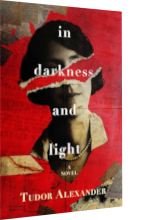
In Darkness and Light
- Pages:
- 280
- Published:
- 2026
- Publisher:
- Boyle & Dalton
- Written In:
-

-
No Portrait in the Gilded Frame
- Pages:
- 309
- Published:
- 2016
- Publisher:
- CreateSpace
- Written In:
-
-
Planet New York
- Pages:
- 185
- Published:
- 2000
- Publisher:
- Xlibris
- Written In:
-
-
Planeta New York
- Pages:
- 182
- Published:
- 2000
- Publisher:
- Univers
- Written In:
-
-
Rama fără portret
- Pages:
- 455
- Published:
- 2019
- Publisher:
- SAGA
- Written In:
-
-
Revoluția Română
- Pages:
- 236
- Published:
- 1991
- Publisher:
- Evenimentul
- Written In:
-
-
The Last Patient
- Pages:
- 360
- Published:
- 2025
- Publisher:
- Boyle & Dalton
- Written In:
-
-
Vizitatorul
- Pages:
- 300
- Published:
- 2011
- Publisher:
- Junimea
- Written In:
-
Interviews & Reviews
In Darkness and Light
Synopsis
Told across braided timelines, In Darkness and Light traces Tina’s life from a fiercely hopeful Jewish girl in Romania to a woman shaped by the horror of war and loss and the pursuit of a better future.
As antisemitism tightens its grip on the cusp of World War II, young Tina is drawn to the promise of communism, joining an underground movement that seems to offer justice in an increasingly hostile world. When Tina and her family are deported to a desolate village in Transnistria, she endures unimaginable hardship, emerging changed, her convictions strengthened.
In the years that follow in a newly communist Romania, Tina enrolls in medical school. She meets Iulian, a brilliant writer and devoted party member whose blindness shapes how he sees the world and how he understands it. Their love is deep and real, grounded in a shared belief of an equitable society they are trying to build for their country and their young daughter.
But history intervenes. The corrupt and often violent methods of the regime begin to surface, and Tina is forced to confront a growing unease—about her country, her ideals, and herself. After a shocking loss, the only choice remaining is to seek a path forward.
At once a sweeping love story and a profound tragedy, In Darkness and Light explores the powerful allure of ideology and the difficult reckoning when ideals clash with the realities of life.
To purchase this novel from Amazon, click here. To purchase from Barnes and Noble, click here. You can also shop local or get a copy that supports your favorite local bookstore by ordering through Bookshop.org.
Excerpt
Tina examined her face in the small mirror between the two beds. Her cheeks were flushed and her blue eyes full of doubt and anticipation. “I hear he has a reputation with women,” she said to Flora, who was standing behind her. Flora, her lifelong friend and former college roommate.
“Is that a problem?” asked Flora.
“Look at my face, round as a doll’s.” Tina rose on her tiptoes. “And I’m short. Why would he like me?”
“It’s just a job interview, Tina Friedman. He doesn’t have to fall in love with you.”
Flora was five months pregnant. Her belly was showing, and eight weeks earlier, she had married and moved in with her husband. Now Tina shared the room and the rent with another medical student. She had no family in Timișoara, and her income consisted of her scholarship and the little bit she earned working at night as a seamstress. She needed more money and a more regular schedule. The exams were approaching. She lifted her light-brown curls and pressed them against her hot cheeks.
“Comrade Faur is the embodiment of what we admire in a man,” Flora said. “A true comrade. At twenty-five, he’s in charge of a major publication. He is a poet and a communist. Intelligent and totally dedicated to our movement.”
Flora came from a religious family. As a child she had often heard her parents talk about Palestine, and under Tina’s influence Flora had traded Zionism for communism.
“Is Faur a changed name?” Tina asked. “I heard he is Jewish.”
“So are we, and you always said that it doesn’t matter if one is Jewish or Romanian. Communism taught us that.”
*
“Comrade Faur, Comrade Friedman is here,” the secretary announced. She allowed Tina to enter an office with a high ceiling and large windows.
He dominated the room, tall behind his desk. His face was relaxed, his eyes hidden behind dark glasses. He pointed to an armchair, and Tina sat, clasping her brown leather bag against her chest, making sure not to wrinkle her blouse. Old trees stood guard outside the windows, filtering the spring light through their leaves.
Tina didn’t realize he was blind until he told her what the job entailed—he needed someone to read to him books, newspaper articles, and reports, for two to three hours a day, ideally a person with good diction, a soft voice, and a passion for literature. The magazine he was leading, The Fighters of Banat, published poetry, essays, and political articles in support of the new communist regime. The pay was good.
With a smile, he explained that he was irritable and moody and that he expected a lot from people.
Not surprising for a blind man to be irritable, Tina thought, suddenly calm, like a doctor assessing a patient. She assured him she’d be up to the task, and told him she was a medical student, lived with a roommate, and really needed the money. She said she was originally from Câmpulung in Moldova, at the opposite end of Romania. Being Jewish, she and her family had been deported to Transnistria during the war for three long, horrible years. “I was seventeen when they took us,” she said, and added that her father had died when she was twelve, so her family at that time consisted of her mother, brother, sister, and Babtzia, her grandmother, who did not survive.
She stopped. He had to know the fate of most Jews during the war, but it was hard for her to read his reaction, his face partially hidden by glasses. Uncertain, she continued. “After the war, we returned to Câmpulung and found our house occupied and our valuables stolen. I took a job as an elementary school teacher in the small village of Dorohoi.” She told him she studied at night for her high school equivalency diploma. She was tired and sometimes hungry, memories of Transnistria haunting her sleep. But she was determined to go to college, and, after she took her equivalency, Flora, her childhood friend, convinced her to come with her to Timișoara and apply to the medical school.
“You are young. You have strength and determination,” Comrade Faur said, running his fingers through his curly black hair.
“I understand the value of education,” Tina said. She inhaled deeply.
“Then you’d be disappointed in me. My father didn’t think I was college material. He sent me to a trade school, and, for a while, I worked at a foundry.”
“Learning a trade is useful, and it helps us understand the working class and their just struggle. I’ve been working on and off as a seamstress since before the war when, in Câmpulung, they expelled all the Jews from high school. As for you, look how much you’ve achieved! A well-known poet, in charge of a major publication.”
“Not so major,” he said with a chuckle. “More like a propaganda tool, financed by the Communist Party.”
“I’ve been a communist for many years,” Tina said. “I don’t know if that matters to you.”
“Of course it does. I want to work with someone who shares my view of the world, my convictions.”
“Even though I’m studying to be a doctor, I love literature,” Tina said.
The more they talked, the more she enjoyed his presence, and she dared think that he, maybe, liked her as well. She asked if she would be taking dictation, and he inserted a sheet of paper into his typewriter and quickly tapped on the keys. Despite his lack of sight, he seemed proficient. He wrote, “I know you’ll do very well. You’re hired.”
Tina folded the sheet of paper and silently placed it in her purse, while her face carried a smile Comrade Faur could not see.
*
“You did not tell me that he was blind,” she reproached Flora.
“I didn’t know. After I learned it from you, I asked around. The rumor is that he lost his vision when he shot himself out of love for a woman. Her name was Emma. Apparently, they had a passionate relationship during the war, but she left him when her husband returned from the front.”
“How romantic.”
“Tragic, not romantic,” Flora said.
*
At first, Tina addressed him as Comrade Faur. He stopped her. “Call me Iulian.”
She read to him articles about to be published, and he voiced his observations. She wrote them down and passed them on to other editors. His comments were always clear and to the point. His support for the new regime was unwavering.
From time to time, he asked her to read to him from his own poetry. She liked it. As he listened to her, he seemed to be adrift, unsure of himself, struggling to control his emotions. One day, he pulled a sheet of paper from the breast pocket of his jacket. “I wrote it last night.” It was a love poem in blank verse, raw and simple, addressing an unnamed woman. Tina’s voice quivered. Could it be me? she wondered.
“I have an unusual request,” he said. “Allow me to touch your face. I want to know you.”
She had no wrinkles, no bags under her eyes, and no furrows across her forehead. She stretched her neck to face him, closed her eyes, and waited. His hands, warm and delicate, made her blush.
That night she told Flora that she was falling in love with him.
“You know he’s seeing another woman.”
“I do, and I can’t help it.” Tina waited a second and added, “Besides, he cannot see anybody.”
More and more she thought about his blindness, not just the cause of it but the way he must feel. She tried to imagine being him: moving as though in a cellar without a door, without a sliver of light from the outside, or walking inside a tunnel without a beginning or an end, with the walls closing in, tighter and tighter, or standing in the pitch darkness of the night, cold drafts sweeping around him, strange noises picked up by a heightened sense of hearing. Confusion. Smell, touch, taste enhanced by his lack of vision and by a continuous and inevitable desire to escape the condition. All black, and all along, the memory of what had been when there was color.
He was compensating, she thought. He was in denial. She recognized in him an exacerbated sense of duty and a need for self-sacrifice, a contagious devotion to the communist cause that competed with his survival instinct. That was who he was: a revolutionary dedicated to his fight, a wounded troubadour, a romantic poet. Women loved him, and she understood why. Women needed to love him. She loved him too, for his handicap that had become a fascination, like a mother who loved her premature and defenseless baby, totally, unquestionably, yearning to protect him. And she loved him in a different way also, sexually, like a woman desires a man with all her being, like she had never desired anyone. There had been two others: Felix in Transnistria, whom she had loved for a little while, but not fully, and who seemed to have disappeared forever, and later David, during that winter vacation she had taken with her family when she was twenty. He was twenty-seven. They had gone to a New Year’s Eve party together. They had danced and had drunk champagne. Losing her virginity to him had been a fog, a song, a night to remember. But those bubbles fizzled out in a hurry.
What she felt for Iulian was different.
One day they talked about the unrest in China. He said he had forgotten the layout of the countries on the Asian continent. Tina made him a map on a piece of cardboard, on which she stitched the borders with heavy thread. She watched him feel the threads with his fingers and guided him by saying the names of the various countries: Mongolia, China, Korea, India.
He leaned over the map and kissed her.
*
Months went by. The exams were over and so was half the summer. Flora had given birth to a boy.
Tina and Iulian didn’t date. Their work sessions were their dates, and she waited for them, eagerly, impatiently. He played the violin for her. He stood in the middle of the office, tall, straight, his head leaning forward, his eyes hidden by his glasses, one arm extended, the second moving the bow with assurance, filling the space with music. She listened enthralled, her eyes closed, trying to feel what he was feeling. “You were magnificent,” she said when he finished.
“It gives me life, the violin,” he said.
She swallowed hard. “That other woman you were dating?”
“Dating?” He shook his head. “It’s over.”
Tina believed him.
The summer days were long, and they worked until the daylight faded. The speckled shadows of trees and leaves projected onto the walls and the carpet, like the screen of a kaleidoscope filled with translucent green shards.
She saw the magic of light and was sad he didn’t. She guided him to her armchair, sat him down, and climbed in his lap. “Tell me what you like about me,” he asked her, and she answered between kisses. “You’re handsome. You’re smart. You’re talented.”
“Tell me about your family,” he said, his hands all over her, strong hands with long, sensitive fingers.
“I was my mother’s fourth child. Her name is Edith,” she said, drowning in desire. “She was thirty-nine when she had me. Rifka, her firstborn, died at five months. My mother never got over Rifka. My sister is thirteen years older than me; my brother, ten. I fear I was unwanted. An accident.”
“I think you’re your mother’s proudest achievement.”
Tina blushed. She pushed her face into his shoulder as if to hide her emotions and kept telling him more. She kept talking…